PZ Meyers responds to Sam Harris
Earlier I wrote about Sam Harris telling atheist we should stop using the word atheist to describe ourselves. I still agree with that point of view and actually this response by PZ Meyer is exactly the kind of infighting it can cause.
Sure he's got a point, but I think the essential thing here is not caring what other people call you and committing yourself to reason so that eventually someday labels like "Atheist" won't matter. People are called lots of things they are not, it doesn't mean they have to accept that because someone else calls them that. Terrorist call me "white devil" but I don't nod my head and go okay I'm a white devil. This is really about being an individual and not being part of a group. The whole idea being reason and dis-belief is making your own decisions. And I think Sam is trying to discourage GroupThink (if I can coin my own doublespeak, unless it already is one, I don't remember).
A group does provide streagth and presence, but at the same time it demands a set of belief's that in the case of non-belief not everyone agrees with. It reminds me of this passage in the Humanist Declaration:
It's a fine line to walk. And I think Sam is just trying to keep us on that line.
You say you never thought of yourself as an atheist before. And there, I think, is the major rebuttal to your own thesis. It doesn't matter that you don't call yourself an atheist. Sam, they're going to call you an atheist anyway. Your friends might be willing to accede to your wishes and stop calling you an atheist, but your enemies won't, and the media, which has promoted you as an atheist, probably won't … and if they do, you'll vanish from your influential position rather quickly. You don't get to choose what other people will call you.
Sure he's got a point, but I think the essential thing here is not caring what other people call you and committing yourself to reason so that eventually someday labels like "Atheist" won't matter. People are called lots of things they are not, it doesn't mean they have to accept that because someone else calls them that. Terrorist call me "white devil" but I don't nod my head and go okay I'm a white devil. This is really about being an individual and not being part of a group. The whole idea being reason and dis-belief is making your own decisions. And I think Sam is trying to discourage GroupThink (if I can coin my own doublespeak, unless it already is one, I don't remember).
A group does provide streagth and presence, but at the same time it demands a set of belief's that in the case of non-belief not everyone agrees with. It reminds me of this passage in the Humanist Declaration:
Secular humanism is not a dogma or a creed. There are wide differences of opinion among secular humanists on many issues. Nevertheless, there is a loose consensus with respect to several propositions. We are apprehensive that modern civilization is threatened by forces antithetical to reason, democracy, and freedom. Many religious believers will no doubt share with us a belief in many secular humanist and democratic values, and we welcome their joining with us in the defense of these ideals.
It's a fine line to walk. And I think Sam is just trying to keep us on that line.
Weatherly's view on Young Earth Creationists
I am going provide a link to the blog of an old professor of mine. In his post titled "out day in the museum part one" he talkds about his trip to the over-hyped Creationist Museum. Be warned, the author talks like a bible college professor(because he is one) so there may be some rhetoric that one may not be familiar with. What I like about what he says is his emphasis on Chrisitian unity, and the fact that the peopel at Answers in Genesis are crazy (he says it with more tact).
When most people think of Christians they think of that type of a Christian, a young earth creationist. As I have posted before I do think that way, and I love the fact that our earth is very very very (billions of times) old. It should be noted that most of the content of the museum reflects the view of the leader of AIG, Ken Hamm. I have listened to what he has to say and can tell you not to waste your time. I do not believe in a 6 day creation (and neither do most of the Christians I know) so please think about that before you pigeon hole Christians you meet.
I may in a later post talk more about my thoughts on this subject, but until then you can enjoy Dr. Weatherly's thoughts.
http://seldomwrong.blogspot.com/2007/10/our-day-in-museum-part-one.html
When most people think of Christians they think of that type of a Christian, a young earth creationist. As I have posted before I do think that way, and I love the fact that our earth is very very very (billions of times) old. It should be noted that most of the content of the museum reflects the view of the leader of AIG, Ken Hamm. I have listened to what he has to say and can tell you not to waste your time. I do not believe in a 6 day creation (and neither do most of the Christians I know) so please think about that before you pigeon hole Christians you meet.
I may in a later post talk more about my thoughts on this subject, but until then you can enjoy Dr. Weatherly's thoughts.
http://seldomwrong.blogspot.com/2007/10/our-day-in-museum-part-one.html
Reading List
Here is a short list of books that we recommend for anyone to read. They are books that have helped us in our understanding of the world around us or inspired us to think about something in a way we hadn’t before. If you’ve read any of these books you’ve no doubt enjoyed them as we have, or perhaps not. But if you see a book you haven’t read, which are many for me, please take the time to read it. Also feel free to suggest more books and I will add them to the list.
The Bible - God(?)
The Dhammapada - Buddha(?)
Tao Te Ching - Lao Tzu
Siddhartha - Herman Hesse
Damien - Herman Hesse
Moses and Monotheism - Sigmund Freud
The Fountainhead - Ayn Rand
Timeline - Michael Crichton
Red Mars, Green Mars, Blue Mars - Kim Stanley Robinson
No god but God - Reza Aslan
Living Buddha, Living Christ - Thich Nhat Hahn
The Virtue of Selfishness - Ayn Rand
Mere Christianity - C.S. Lewis
Letter's From the Earth - Mark Twain
The Humanoids - Jack Williamson
Rabbit Run - John Updike
The Planet that Wasn't - Isaac Asimov
Slaughterhouse Five - Kurt Vonnegut
A Clockwork Orange - Anthony Burgess
One Flew Over the Cuckoo's Nest - Ken Kesey
Candide - Voltaire
Zen and the Art of Motorcycle Maintenance - Robert M. Pirsig
Island - Aldous Huxley
Wonder why a particular book is on this list? Ask!
The Bible - God(?)
The Dhammapada - Buddha(?)
Tao Te Ching - Lao Tzu
Siddhartha - Herman Hesse
Damien - Herman Hesse
Moses and Monotheism - Sigmund Freud
The Fountainhead - Ayn Rand
Timeline - Michael Crichton
Red Mars, Green Mars, Blue Mars - Kim Stanley Robinson
No god but God - Reza Aslan
Living Buddha, Living Christ - Thich Nhat Hahn
The Virtue of Selfishness - Ayn Rand
Mere Christianity - C.S. Lewis
Letter's From the Earth - Mark Twain
The Humanoids - Jack Williamson
Rabbit Run - John Updike
The Planet that Wasn't - Isaac Asimov
Slaughterhouse Five - Kurt Vonnegut
A Clockwork Orange - Anthony Burgess
One Flew Over the Cuckoo's Nest - Ken Kesey
Candide - Voltaire
Zen and the Art of Motorcycle Maintenance - Robert M. Pirsig
Island - Aldous Huxley
Wonder why a particular book is on this list? Ask!
The G Spot
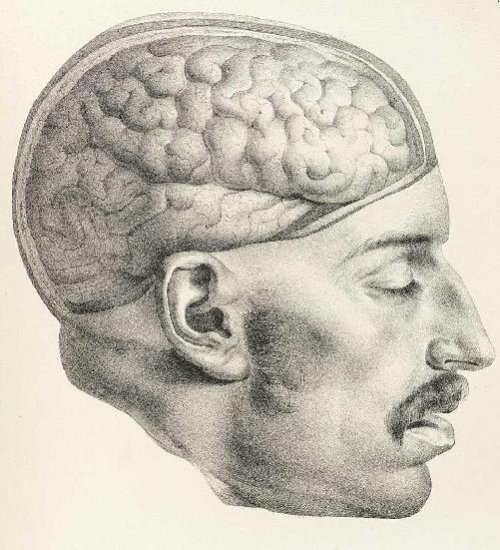
Searching for God in the Brain
via Scientific America:
The doughnut-shaped machine swallows the nun, who is outfitted in a plain T-shirt and loose hospital pants rather than her usual brown habit and long veil. She wears earplugs and rests her head on foam cushions to dampen the device’s roar, as loud as a jet engine. Supercooled giant magnets generate intense fields around the nun’s head in a high-tech attempt to read her mind as she communes with her deity.
The Carmelite nun and 14 of her Catholic sisters have left their cloistered lives temporarily for this claustrophobic blue tube that bears little resemblance to the wooden prayer stall or sparse room where such mystical experiences usually occur. Each of these nuns answered a call for volunteers “who have had an experience of intense union with God” and agreed to participate in an experiment devised by neuroscientist Mario Beauregard of the University of Montreal. Using functional magnetic resonance imaging (fMRI), Beauregard seeks to pinpoint the brain areas that are active while the nuns recall the most powerful religious epiphany of their lives, a time they experienced a profound connection with the divine. The question: Is there a God spot in the brain.
This is kind of counter to what I think we've been talking about but probably interesting. I think they've tried to do this before, but with no real results. They probably talk about it in the article, but I didn't read it all, its like six fucking pages. I'll read it later and comment.
Another blog I'm adding to my RSS feeder
Revolution in Jesusland
via their about page...
via their about page...
This blog is a plea to the progressive movement, to take another look and get to know the diverse and complex world of evangelical Christianity in its own terms. Here you’ll find interviews, commentary, analysis and other dispatches from all over “Jesusland.” This tour will explore everything from the workings of the local church, to the evangelicals’ vibrant, decentralized national leadership training infrastructure to theological questions such as, “How in the world DO they read the Bible literally?” and “Do they really think I’m going to hell?”worth checking out
Subscribe to:
Posts (RSS)
